

Power factor correction used to be simple: switch in a few capacitors, raise the power factor, done. But modern electrical installations are full of variable frequency drives (VFDs), rectifiers, UPS systems, servo drives and LED drivers — non-linear loads that inject harmonic currents back into the network. In this environment, a plain capacitor bank is no longer a safe solution. Left unprotected, it can become a magnet for harmonic current, overheat, and fail within months. The device that prevents this is the detuned reactor. This guide explains what it is, how it works, and why it belongs in nearly every low-voltage capacitor bank installed today.
What is a detuned reactor?
A detuned reactor — also called a detuning reactor, series reactor, or anti-resonance reactor — is an inductor connected in series with each capacitor step in a power factor correction (PFC) bank. Together, the reactor and the capacitor form a series L-C circuit. By choosing the inductance correctly, the resonant frequency of that circuit is deliberately placed below the lowest significant harmonic in the network (usually the 5th harmonic, 250 Hz on a 50 Hz system).
The size of the reactor is described by its detuning factor (also called reactance rate), written as a percentage:
p (%) = XL / XC × 100
where XL is the reactance of the reactor and XC is the reactance of the capacitor at fundamental frequency. Common values are 5.67%, 6%, 7%, 12% and 14%. A 7% reactor, for example, tunes the L-C branch to roughly 189 Hz — safely below the 5th harmonic — so the branch can never resonate at a harmonic frequency the grid actually contains.
Why capacitors and harmonics don’t mix
A capacitor’s impedance falls as frequency rises (XC = 1 / 2πfC). To a 250 Hz or 350 Hz harmonic, a capacitor looks like a low-impedance path — so it naturally draws harmonic current far in excess of what it was sized for. Two problems follow:
- Harmonic overload. The capacitor carries fundamental current plus amplified harmonic current. It runs hot, the dielectric ages quickly, fuses blow, and the unit bulges or fails long before its rated life.
- Parallel resonance. The capacitor bank and the inductance of the supply transformer form a parallel resonant circuit. If that resonant frequency lands near a harmonic present in the load (very common with the 5th and 7th), the harmonic voltage and current are magnified across the whole busbar — damaging not just the capacitors but other equipment too.
In short: adding raw capacitors to a harmonic-rich network doesn’t just risk the capacitors — it can make the plant’s power quality worse.
How a detuned reactor solves the problem
Placing a reactor in series with each capacitor step changes the frequency behaviour of the branch:
- At 50 Hz (fundamental) the branch is still net capacitive, so it delivers the reactive power you need for power factor correction — the reactor does not stop the bank from doing its main job.
- Above the tuning frequency (e.g. above ~189 Hz for a 7% reactor) the branch becomes net inductive. It no longer offers a low-impedance path to the 5th, 7th and higher harmonics, so it stops attracting and amplifying them.
- Resonance is moved out of harm’s way. Because the series-resonant point sits below the lowest harmonic, no dangerous parallel resonance can form at a frequency the grid actually produces.
On top of protecting against harmonics, a series reactor also limits the inrush current when a capacitor step is switched in, and softens switching overvoltages — both of which extend contactor and capacitor life.
Detuning factors explained: 5.67%, 6%, 7%, 12% and 14%
The right detuning factor depends on which harmonics dominate your network. Higher factors push the tuning frequency lower and give more margin, at the cost of a larger voltage rise across the capacitor.
| Detuning factor (p) | Approx. tuning frequency (50 Hz) | Suited to networks dominated by |
|---|---|---|
| 5.67% | ~210 Hz | 5th harmonic and above — chosen where mains-signalling / ripple-control frequencies must be preserved |
| 6% | ~204 Hz | 5th harmonic and above |
| 7% | ~189 Hz | 5th harmonic and above — the most common industrial choice |
| 12% | ~144 Hz | 3rd harmonic and above |
| 14% | ~134 Hz | 3rd harmonic and above |
7% is the workhorse. Most industrial installations are dominated by the 5th and 7th harmonics produced by three-phase drives and rectifiers, and a 7% reactor covers them well. 12% or 14% is used where significant 3rd-harmonic current is present — typically networks with a large share of single-phase non-linear loads (IT power supplies, lighting, small chargers) where triplen harmonics build up.
Detuned reactor vs. tuned harmonic filter
These two are often confused. A detuned reactor is designed to avoid resonance and protect the capacitors; it does not deliberately absorb any particular harmonic. A tuned harmonic filter is the opposite — it is precisely tuned to a chosen harmonic to act as a low-impedance sink and pull that current out of the network. Tuned filters require careful engineering of the whole system and can overload if the network changes. For ordinary power factor correction, a detuned reactor is the safe, robust default; a tuned filter is a specialised solution for heavy, well-characterised harmonic sources.
How to specify a detuned reactor
To select the correct series reactor for a capacitor bank, you need:
- System voltage — e.g. 400, 415, 440, 525, 660 or 690 V.
- Capacitor step rating in kvar — the reactor is matched to the capacitor it sits in series with.
- Detuning factor — 7% for a 5th-harmonic-dominant network; 12–14% where the 3rd harmonic is significant.
- Capacitor voltage uprating — because the reactor raises the voltage seen by the capacitor, a detuned bank uses capacitors with a higher voltage rating than the system nominal (for example 0.45 kV or 0.525 kV capacitors on a 0.4 kV system). This is essential and easy to overlook when retrofitting.
- Thermal and duty rating — dry-type construction, an adequate insulation class, and headroom for the extra RMS current that harmonics add.
The Weilian WLSRSG detuned series reactor
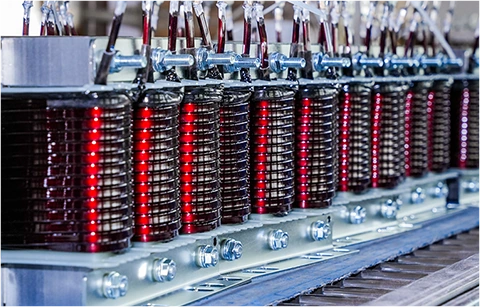
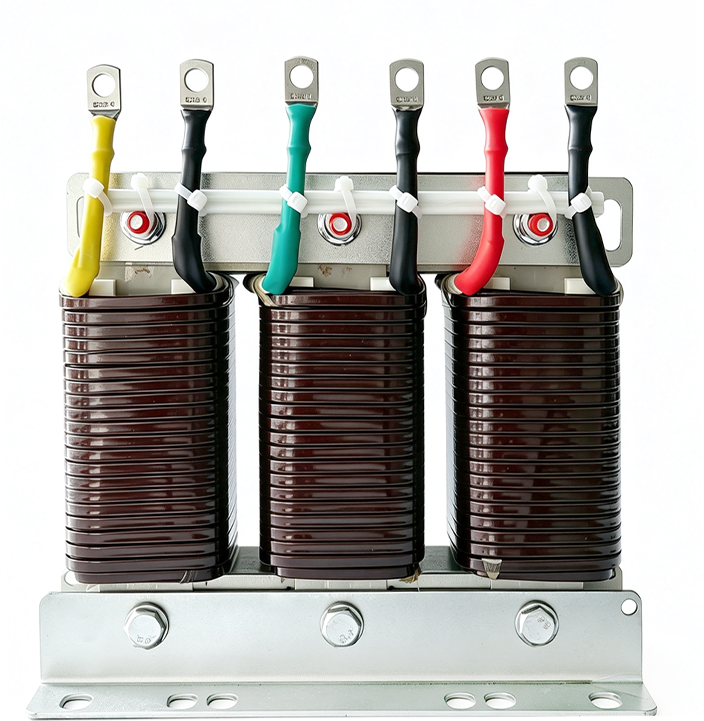
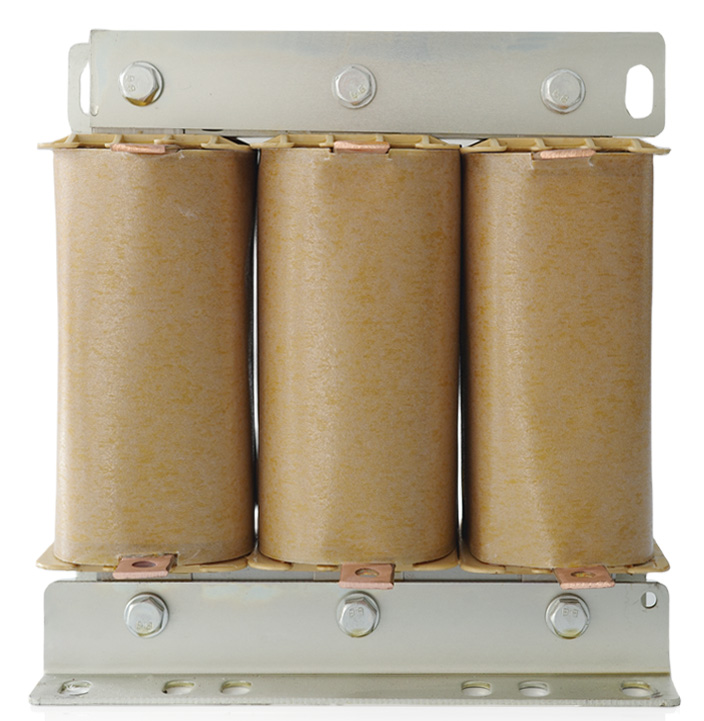
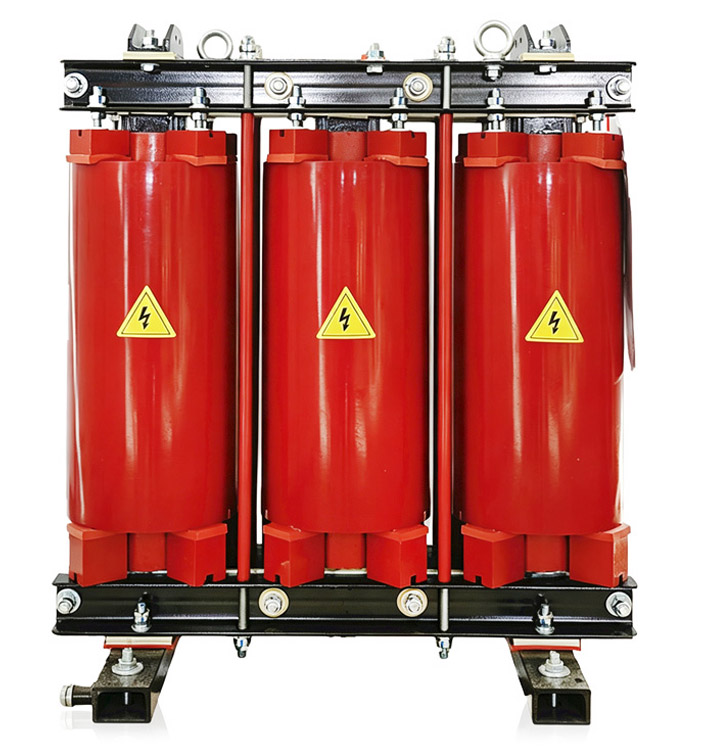
Zhejiang Weilian Electric manufactures the WLSRSG series of three-phase, dry-type, iron-core detuned series reactors, built specifically to be connected in series with power capacitors for reactive power compensation and harmonic suppression. Key features:
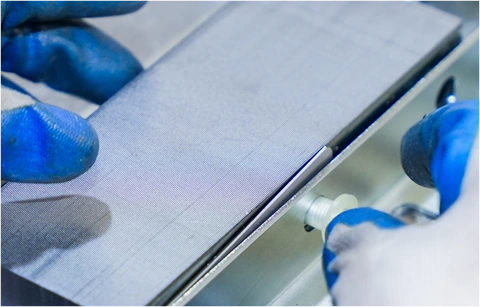
- Core built from premium imported silicon-steel laminations, divided into uniform short segments by multiple air gaps with epoxy-fabric spacers, keeping the air gap stable throughout long-term operation.
- Vacuum epoxy-cast windings with multi-layer epoxy glass-mesh inter-turn insulation — non-hygroscopic, low partial discharge, high mechanical strength, and resistant to current surges and thermal shock without cracking.
- Insulation class H (155°C); temperature rise of core and windings does not exceed 90 K in normal operation.
- Capable of continuous operation at 1.35 times rated current — real headroom for harmonic loading.
- Low noise, not greater than 65 dB, with epoxy blocks and rubber anti-vibration pads at the coil ends.
- Withstand-voltage level complies with the JB5346-1998 series-reactor standard.
- Available across voltage ratings of 0.4, 0.45, 0.48, 0.525, 0.66 and 0.69 kV, in reactance rates of 1%, 5.67%, 6%, 7%, 12% and 14%, matched to capacitor banks from 5 to 100 kvar. Custom specifications are made to order.
Looking for the right detuned reactor for your capacitor bank? Browse the full WLSRSG detuned series reactor range or send us your system voltage, step kvar and dominant harmonic, and our engineers will recommend the correct model.
Typical applications
Detuned reactors are used wherever capacitor banks operate in a harmonic environment: factory and building power factor correction panels, distribution rooms, data centres, and renewable-energy sites such as solar PV and wind farms. Any installation running VFDs, rectifiers or large non-linear loads should treat a detuned reactor as standard, not optional.
Frequently asked questions
Do I always need a detuned reactor?
If the network has any meaningful harmonic content — and almost every modern installation does — yes. On a clean network with no non-linear loads a bare capacitor bank can work, but that situation is increasingly rare, and a detuned reactor is inexpensive insurance against premature capacitor failure.
What happens if I use capacitors without one?
The capacitors draw amplified harmonic current, overheat, and age rapidly; fuses blow, units bulge, and the bank can trigger or worsen a parallel resonance that affects the whole busbar. Premature capacitor failure in harmonic-rich plants is very often traced back to a missing series reactor.
Should I choose 7% or 14%?
Choose 7% when the 5th and 7th harmonics dominate — the typical case for plants full of three-phase drives. Choose 12% or 14% when the 3rd harmonic is significant, usually where there is a large share of single-phase non-linear load. If you are unsure, a harmonic measurement at the point of connection settles it.
Can I add reactors to an existing capacitor bank?
Yes, but you must also confirm the capacitor voltage rating. A detuned reactor raises the voltage across the capacitor, so capacitors rated only at the system nominal voltage may be over-stressed. Retrofits normally pair the reactor with capacitors of an appropriately higher voltage rating.
Is a detuned reactor the same as a harmonic filter?
No. A detuned reactor protects the capacitors and prevents resonance without targeting a specific harmonic. A tuned harmonic filter is deliberately designed to absorb a chosen harmonic and requires full-system engineering. For standard power factor correction, the detuned reactor is the correct choice.
Conclusion
In today’s harmonic-rich networks, a capacitor bank without a detuned reactor is a liability waiting to fail. The reactor keeps the bank doing its real job — improving power factor — while shielding it from harmonic overload, inrush current and resonance. Specifying the right detuning factor and a properly rated, dry-type reactor is the difference between a capacitor bank that lasts for years and one that fails in a season. For most low-voltage installations, that means a 7% detuned series reactor, correctly match